Peptide research into fat loss, metabolic function, and body composition has accelerated significantly in the last five years. The publication of Phase 2 and Phase 3 trial data for GLP-1-based compounds and, more recently, triple receptor agonists has changed what researchers are focused on. This guide covers the main peptides generating interest for fat-loss-related research in Australia in 2026, with published evidence behind each.
One important framing note: this is a research guide, not a clinical protocol. All of the peptides discussed here are studied in controlled laboratory and clinical trial settings. The intent is to give researchers a clear picture of what the published data shows.
Retatrutide: The Triple Receptor Agonist
Retatrutide is the most discussed peptide for metabolic research in 2026. It is a triple agonist of GIP, GLP-1, and glucagon receptors, which distinguishes it from earlier generation compounds like semaglutide (GLP-1 only) or tirzepatide (GLP-1 plus GIP). The addition of glucagon receptor agonism is the key mechanistic difference, with significant implications for metabolic research outcomes.
The Phase 2 trial published in the New England Journal of Medicine in 2023 reported mean body weight reductions of 17.5% at 24 weeks at the highest tested dose (12 mg weekly), with continued weight reduction observed at 48 weeks in an extension cohort, making retatrutide one of the most potent compounds tested for body weight reduction in a Phase 2 setting at that time. [1]
The glucagon receptor component is thought to drive additional energy expenditure and hepatic lipid metabolism effects that GLP-1 alone does not produce, a synergistic profile that is the main reason retatrutide has become one of the primary compounds in metabolic research pipelines.
Tirzepatide: Dual GIP and GLP-1 Agonism
Tirzepatide represented the prior step change in this space. As a dual GIP and GLP-1 receptor agonist, it demonstrated significantly greater weight loss outcomes than semaglutide alone in the SURMOUNT-1 trial, with mean body weight reductions of up to 20.9% at 72 weeks in participants with obesity. [2]
In terms of mechanism, the GIP receptor component appears to work complementarily with GLP-1 in ways that improve tolerability and enhance adipose-specific effects. For researchers focused on lipid metabolism, insulin sensitivity, and adipose tissue dynamics, tirzepatide's dual-receptor profile remains highly relevant as a comparator and a research tool in its own right.
Semaglutide: The Established GLP-1 Benchmark
Semaglutide remains one of the most-studied compounds in obesity and metabolic research. As a GLP-1 receptor agonist, the STEP-1 trial showed mean body weight reduction of 14.9% at 68 weeks. [3] The breadth of its clinical literature across multiple trials, populations, and metabolic endpoints makes it an important benchmark for comparing newer compounds.
For Australian researchers, semaglutide's published trial data provides useful comparator context when analysing next-generation compounds like retatrutide in preclinical models.
Why Multi-Receptor Agonism Drives the Research
The progression from single (GLP-1) to dual (GLP-1 plus GIP) to triple (GLP-1 plus GIP plus glucagon) represents a deliberate research strategy based on receptor synergy. Early research into co-agonism established that hitting multiple metabolic receptors simultaneously could produce effects greater than the sum of individual parts, a hypothesis that has now been validated in human trial data. [4]
Key open research questions include: What is the optimal receptor-activation ratio? How does glucagon receptor agonism affect longer-term metabolic set points? What are the full mechanistic implications of GIP receptor agonism beyond insulin sensitisation?
What Australian Researchers Are Focusing On
In the Australian research context, the most active areas of peptide-related metabolic research cluster around:
- Body weight and adiposity reduction mechanisms — retatrutide and tirzepatide receptor pharmacology
- Insulin sensitivity and glucose regulation — GLP-1 agonist comparisons across cell and animal models
- Hepatic lipid metabolism — glucagon receptor effects in liver biology
- Receptor pharmacology comparisons — single vs dual vs triple agonism profiles and downstream signalling
Research Supply
Retatrutide and Tirzepatide
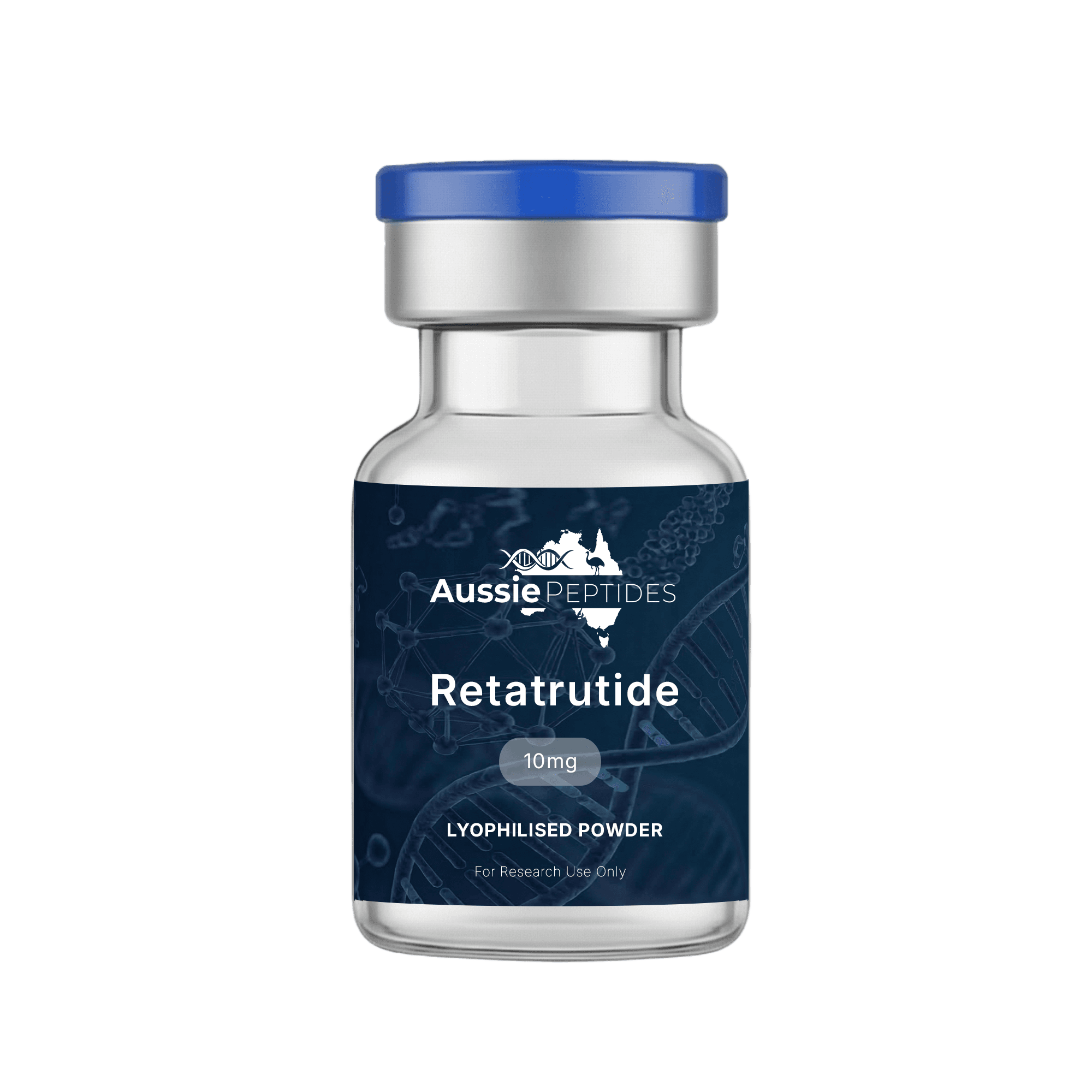
For metabolic receptor research, our Retatrutide (10mg) and Tirzepatide (20mg) are available as lyophilised research vials with domestic shipping and batch-specific CoA support.
Bottom Line
The fat-loss peptide research landscape in 2026 is defined by the progression toward multi-receptor agonism. Retatrutide's triple-receptor profile has set a new benchmark in metabolic trial data. Tirzepatide's dual-receptor design remains a key research comparator. Semaglutide provides the established GLP-1 baseline. For Australian researchers exploring these compounds, the relevant questions are increasingly about mechanism, receptor pharmacology, and translational implications, not just outcome magnitudes.
References
- Jastreboff AM et al. Triple-Hormone-Receptor Agonist Retatrutide for Obesity. N Engl J Med. 2023.
- Jastreboff AM et al. Tirzepatide Once Weekly for the Treatment of Obesity (SURMOUNT-1). N Engl J Med. 2022.
- Wilding JPH et al. Once-Weekly Semaglutide in Adults with Overweight or Obesity (STEP 1). N Engl J Med. 2021.
- Finan B et al. Unimolecular dual incretins maximize metabolic benefits in rodents, monkeys, and humans. Sci Transl Med. 2013.
⚠ All information is for educational and research purposes only. All peptides supplied by Aussie Peptides are for in-vitro laboratory research only and not for human consumption.