BPC-157 (body protection compound 157) is a 15-amino-acid synthetic peptide derived from a naturally occurring gastric juice protein in humans. It has been studied in preclinical settings for over three decades, with a research focus that spans gastrointestinal healing, tendon and ligament repair, nerve regeneration, and systemic protective effects. [1]
For researchers looking for a BPC-157 research overview, the core question is: what does the published evidence actually show, and where are the gaps between animal data and human translation?
What Is BPC-157?
BPC-157 is a pentadecapeptide, a 15-amino acid chain, isolated from human gastric juice. The "body protection compound" name reflects its early characterisation as a cytoprotective agent in gastric tissue. It is stable in both acidic (gastric) and neutral pH environments, which has made it a useful tool in research models across multiple routes of administration.
Importantly, BPC-157 is a synthetic analogue of a protein segment identified in gastric juice, not a naturally occurring peptide in significant concentrations. Its stability and broad tissue activity profile have made it one of the more versatile research tools in the peptide space.
Tendon and Ligament Research
The tendon healing research is one of the most replicated areas in the BPC-157 literature. Multiple animal studies have shown that BPC-157 is associated with accelerated tendon outgrowth, improved cell survival in tendon explant cultures, and faster functional recovery after tendon transection models.
A key study in the Journal of Applied Physiology found that BPC-157 enhanced tendon healing by promoting outgrowth, increasing cell viability, and stimulating tendon-to-bone healing in surgically injured rats, with effects attributed to upregulation of growth hormone receptor expression in tendon fibroblasts and potential influence on VEGF-driven angiogenesis. [2] This makes BPC-157 relevant for researchers studying musculoskeletal tissue repair, tendinopathy models, and tissue engineering applications.
Wound Healing and Tissue Granulation
BPC-157 has also been studied in cutaneous wound models, where it has been associated with enhanced granulation tissue formation, improved collagen organisation, and upregulation of egr-1, an early-growth response gene involved in connective tissue repair. One study found that topical and systemic BPC-157 both improved wound closure rates compared to untreated controls, with histological analysis showing superior tissue organisation in treated groups. [3]
Gastrointestinal and Cytoprotective Research
BPC-157's origin in gastric biology means its GI research is among the oldest and most extensive in the literature. Studies have examined its role in:
- Gastric ulcer healing — including in NSAID-induced, ethanol-induced, and stress-induced ulcer models
- Inflammatory bowel disease models — including TNBS-induced colitis in rodents
- Fistula healing — colocutaneous and rectovaginal fistula models
- Anastomotic healing — intestinal anastomosis models after surgical resection
The cytoprotective mechanisms proposed include modulation of nitric oxide synthase activity, upregulation of growth factors, and direct effects on mucosal integrity. [1]
BPC-157 and the Brain-Gut Axis
A more recent direction in BPC-157 research has been its apparent involvement in the brain-gut axis, the bidirectional communication network between the enteric nervous system and the central nervous system. Research groups have studied BPC-157's effects in dopaminergic and serotonergic pathways, as well as its interactions with the opioid system and nitric oxide signalling in the CNS. [4]
This has expanded the theoretical research scope beyond purely structural repair into areas of neurological and psychiatric relevance, though it is important to note that most of this work remains at the animal model stage.
Where the Gaps Are
The honest limitation of BPC-157 research is the absence of controlled human clinical trials. The vast majority of published work is in rodent models. While the animal data is consistent and mechanistically interesting, rodent models do not always translate cleanly to human physiology, especially for systemic effects and CNS-related outcomes.
This gap is worth acknowledging explicitly because it shapes how the research should be interpreted. The preclinical literature is compelling in scope; the human translation remains incomplete.
Research Supply
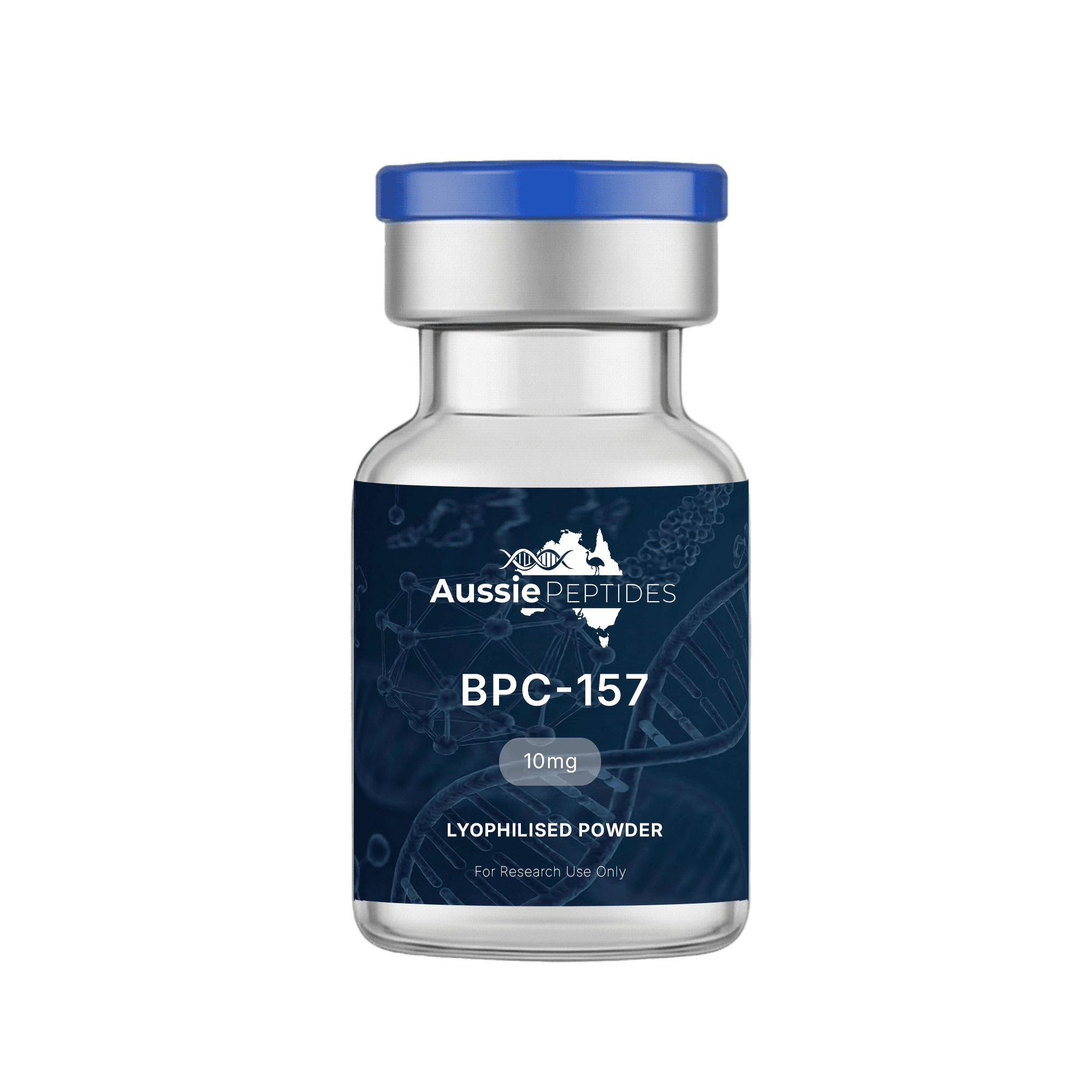
BPC-157 (10mg)
For tissue repair and gastrointestinal research, our BPC-157 (10mg) is supplied as a lyophilised research vial with domestic shipping and batch-specific CoA support.
Bottom Line
BPC-157 has one of the broader research footprints in the peptide space, spanning musculoskeletal repair, gastrointestinal cytoprotection, wound healing, and brain-gut axis research. The preclinical literature is substantial and consistent in showing protective and repair-associated effects across multiple tissue types. The missing piece is clinical human trials. For researchers working in in-vitro and animal model settings, BPC-157 offers a well-characterised tool with a three-decade published history behind it.
References
- Sikiric P et al. Stable gastric pentadecapeptide BPC 157: novel therapy in gastrointestinal tract. Curr Pharm Des. 2011.
- Chang CH et al. The promoting effect of pentadecapeptide BPC 157 on tendon healing involves tendon outgrowth, cell survival, and cell migration. J Appl Physiol. 2011.
- Tkalcevic VI et al. Enhancement by PL 14736 of granulation and collagen organization in healing wounds and the potential role of egr-1 expression. Eur J Pharmacol. 2007.
- Sikiric P et al. Brain-gut Axis and Pentadecapeptide BPC 157: Theoretical and Practical Implications. Curr Neuropharmacol. 2016.
⚠ All information is for educational and research purposes only. BPC-157 supplied by Aussie Peptides is for in-vitro laboratory research only and not for human consumption.